Showing posts with label thought. Show all posts

Sunday, December 2, 2018

Thought: Major Sevenths - The Chords That Defined The Sound Of The 70s?

Every decade is known for a unique sound, characterized by the stylistic choices made by many popular artists in that era. The 60s had psychedelia, the 80s synthesizers, the 90s grunge, and so on. That is, every decade except the 70s.  What's different about the 70s? Well, they did spawn several distinct movements in rock music - metal, progressive rock, and punk to name a few. The musical diversity of the 70s probably makes it hard to pin a specific sound to them. Yet,for the longest time I couldn't stop thinking about what defines 70s music. After all, most of my favorite songs are from that decade.

My theory? The 70s sound so good because they're responsible for bringing to life one of the beautiful chords in all of music - the Major 7th chord. Here's an example of the chord in use by French composer Eric Satie:

Gymnopedie No. 1/Eric Satie

I soon realized that many of my favorite songs from the 70s have this chord somewhere, whether in the verse, chorus, or a bridge or outro. In some of these songs, no instrument may even actually be playing a maj7. However, when combined with the other instruments and the vocals, the overall effect is that of a maj7 chord. I've tried to list my top ones below (there are many more that I can't recall just now).

It's Too Late/Carole King
Make It With You/Bread
I Know What I Like/Genesis
Rain Song/Led Zeppelin
How Deep Is Your Love/Bee Gees
Year Of The Cat/Al Stewart
Color My World/Chicago
We've Only Just Begun/Carpenters
Beast Of Burden/Rolling Stones
Dreams/Fleetwood Mac
Bennie And The Jets/Elton John

So that's my take on what makes the 70s sound so unique. The maj7 is just one of those sweet sounding chords that lends a melodious, laid-back feel to so many songs of that decade. No wonder that so many of the top '70s artists used it, whatever the genre.

Saturday, October 20, 2012

Thought: My favourite drum tracks

Home At Last/Steely Dan  (The classic Purdie Shuffle, named after legendary drummer Bernard "Pretty" Purdie who was hired by the Dan to play on the song.)

I Got A Woman (Ray Charles cover)/John Mayer Trio  (Steve Jordan is a rare heavyweight in the world of drumming today.)

Kryptonite/3 Doors Down  (Lead singer Brad Arnold played the drums on this album.)

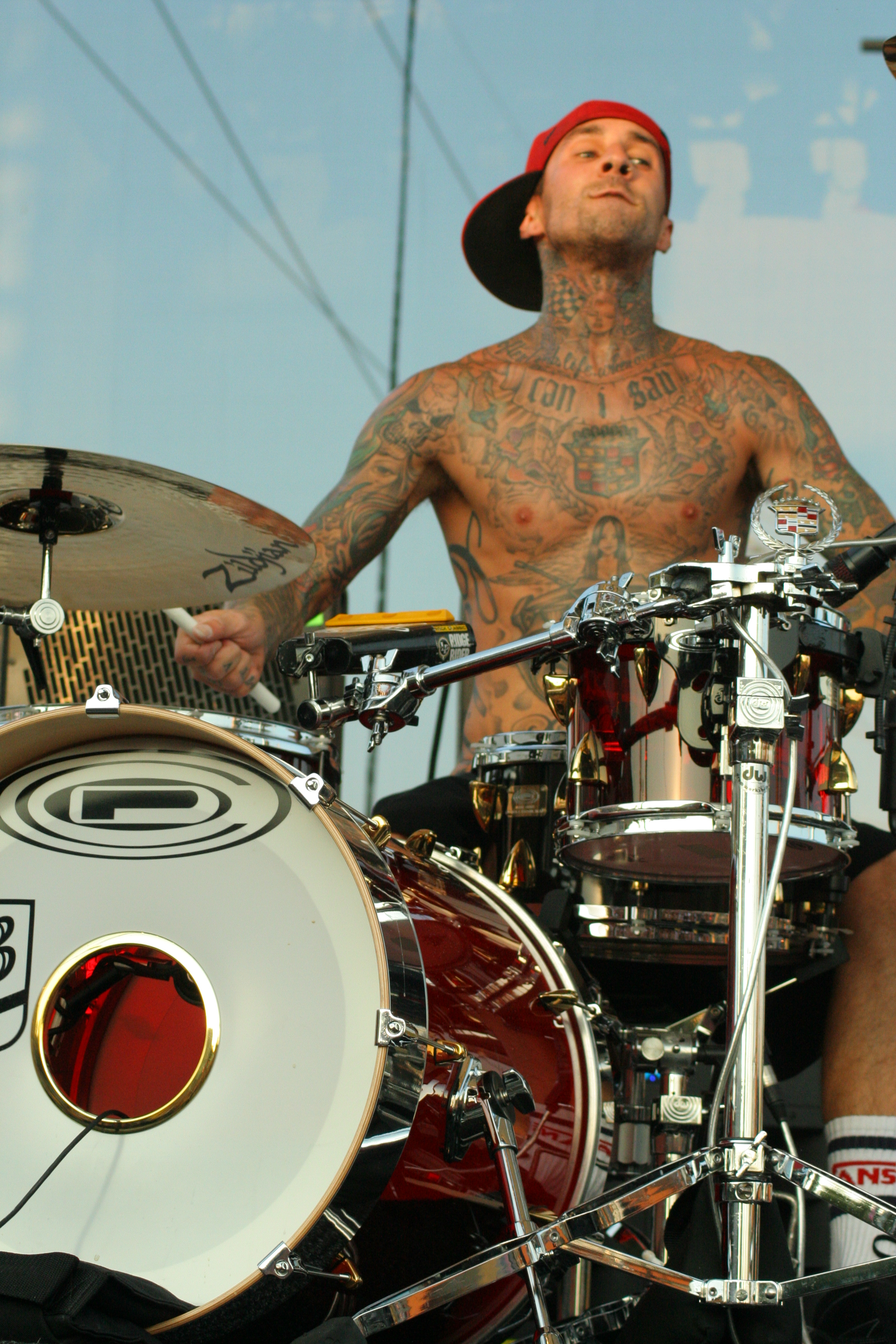
Stay Together For The Kids/Blink 182  (Travis Barker plays a sweet groove in the verses. I have countless memories of jamming to this song in college.)

Strange Kind Of Woman/Deep Purple  (Ian Paice's shuffle is a classic example of the band's versatility.)

Californication/Red Hot Chili Peppers  (I can safely say that this song got me seriously interested in playing the drums for the first time. I remember when the video would air on MTV and I would wait for the scenes showing Chad Smith behind his kit, flawlessly executing the track's crisp groove.)

No Excuses (unplugged)/Alice In Chains  (Sean Kinney's intro is so sweet, I could watch the video over and over again.)

Gunning Down Romance/Savage Garden  (Studio artist par excellence Steve Smith was called upon to lay down the drums on the album.)

War Pigs/Black Sabbath  (Bill Ward is clearly having a blast. Isn't that what drumming is all about, really?)

Your New Twin Sized Bed/Death Cab For Cutie  (Jason McGerr is a master of the 16-beat hi-hat. Check out the track "You Are A Tourist" if you still aren't convinced.)

Friday, June 29, 2012

Thought: My favorite country ballads

Country music always has a story to tell. It could be a story about love, or heartbreak. It could be a tale of hardship, or bravery. The country ballad has sadly faded away in recent times, and I can think of no better way to immortalize it than with a blog post.

This one's for all you nostalgic ones. :)

Senorita/Don Williams

Tom Dooley (cover)/Kingston Trio

Coward Of The County/Kenny Rogers

The Deck Of Cards (cover)/Tex Ritter

Two Sparrows In A Hurricane/Tanya Tucker

Choices/George Jones

Whiskey Lullaby/Brad Paisley & Alison Krauss

Folsom Prison Blues/Johnny Cash

Monday, June 11, 2012

Thought: Post Grunge


A few months ago, in an interview to Rolling Stone, Patrick Carney of the Black Keys launched a blistering attack on today's music scene, Nickelback, and the post grunge movement of the '90s and '00s. Now, I'm not really a fan of the Black Keys, and haven't heard much of their music. However, I do know that I love post grunge, a genre that has played an important role in my evolution as a musician and a listener. I write this piece in defense of a genre of rock music that has been frequently (albeit erroneously) maligned in recent years.

Post grunge has been defined as "commercially acceptable grunge". It gained popularity in the mid-'90s (around the time of Nirvana's demise) and continued into the '00s. Musically, it differed from grunge music in that it had a more "produced" feel. The chord progressions were more structured and the rhythms better timed. Critics of the genre have often complained that it lacked the freestyle sound of classic rock. Fans of post grunge, on the other hand, welcomed its tight sound and structured arrangements. The term “post grunge” is a bit misleading. Many of the famous post grunge bands of the nineties actually started out as punk/alternative acts in the '80s and early '90s, before grunge had even been born. The Goo Goo Dolls were a loud punk band before they developed their matured sound, evident on albums like Dizzy up the girl and Gutterflower. Another common misconception regarding post grunge is that it created classic rock “haters”. On the contrary, many post grunge acts like Matchbox 20 and Nickelback introduced a whole generation of listeners (my generation) to the sounds of classic bands, by playing their covers during live shows. I still remember the first time I saw Nickelback on TV. They were rocking out on a cover of ZZ Top's “La Grange”. Since that day, ZZ Top has remained one of my favorite bands.

For thousands of listeners like me, post grunge offered a much needed escape from the ubiquitous sounds of “bedroom pop” prevalent at the turn of the millennium. The soundtrack of my mid-teens was a heady brew of Goo Goo Dolls, Staind, Foo Fighters, Collective Soul, Incubus, Matchbox 20, Counting Crows, Nickelback, and Audioslave, with some Godsmack thrown in for good measure. To this day, I can't listen to a Goo Goo Dolls tune without remembering long car drives, after-school jams with the band, and blissful hours of listening spent with girlfriends past. Nowadays, you've got rock n' roll bands like the Black Keys and the White Stripes, with a rawer and more easy-going sound. It's great. I think their time has indeed come. However, in the midst of this change, it's easy to forget bands like Nickelback who dared to push the envelope at a time when the world had forgotten how to rock.

The essential post grunge playlist


Saturday, May 19, 2012

Thought: Music, The Ultimate Time-Stretcher

So here's something interesting. I've discovered I can slow down time with music. Not really, of course, but the minutes do seem a lot longer when I'm listening to stuff.

Song: Desert Heartbeat/Zakir Hussain

Does it happen to you? You're listening to your favourite song, and when it ends, you can't remember what life was like before you hit the 'play' button.

I, myself, often feel like a changed person altogether. Like I've undergone some sort of cleansing ritual. I can't remember what my mental state was before the song started playing. It's fantastic.

Song: A Time For Us/Nicolas Jaar

If you haven't experienced the feeling, you really should try it sometime. You could even be in the middle of work. Just fish out your iPod or whatever, select your favorite track and start listening. Once the song ends, it'll be like a new day again, I promise.


Sunday, January 22, 2012

Thought: My favourite studio albums of the early '80s

In a way, the early '80s represented a renaissance for the music industry. After the avant-garde '60s and '70s, bands (both new as well as existing) realised that their music couldn't continue to sell on composing genius alone. Gone were the days when a fan would hear you at a concert and then rush starry-eyed to the nearest record store. The focus was shifting to sound quality. The best songwriters couldn't hope to stay in the business if they didn't spruce up the recording process. Session musicians were regularly called to assist in recording. Studio technology became more and more sophisticated. 

However, the aim wasn't to create or synthesize new effects. Indeed, it was intended, through the recording process, that the listener hear exactly what the artists heard. New methods of mastering were introduced to minimise muffling and 'open' the record's sound.

It was in the midst of this change that some truly beautiful sounding records were created. A few of my favourite albums from the era are listed below.

Gaucho/Steely Dan

Year : 1980

Donald and Walter's final studio album before a 12 year hiatus. The recording process employed more than 42 musicians and took over a year to complete. It resulted in one of the most sonically perfect albums ever produced. The song "Babylon Sisters" from the album has been previously featured on this blog. The album won the Grammy award in 1981 for Best Non-Classical Engineered Recording.


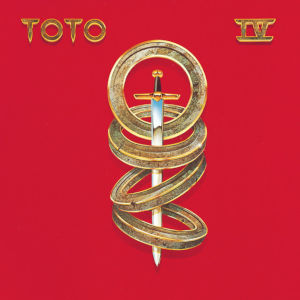
Toto IV/Toto

Year : 1982

Toto was formed in 1977 by two session musicians who had played on enough albums to know their way around a studio. Toto IV is the band's magnum opus, a collection of catchy, R&B inspired tracks that employed some of the best in the recording business, including arranger James Newton Howard and backing vocalist par excellence Timothy B. Schmit. Drummer Jeff Porcaro's half-time shuffle on "Rosanna" is the stuff of legend. The album won six Grammy awards that year, including Record Of The Year, Album Of The Year and Producer Of The Year.


90125/Yes


Year : 1983

By far their most poppish work, both musically as well as thematically. Fans of their prog-rock days might have been disappointed, but there's no denying that the album packed quite a punch. The song "Owner Of A Lonely Heart" remains their biggest chart success to date. The vocals on "Leave It" are simply fantastic. "Changes" and "Cinema" are vintage Yes, with extended instrumental parts and complex rhythms. All in all, a contemporary sounding album that introduced the band to a whole new breed of listeners, rather than just playing to the existing fans.


Brothers In Arms/Dire Straits

Year : 1985

From the drum crescendo on "Money For Nothing" to the tonal complexity of Knopfler's Les Paul guitar on the title track, the album's sound was grander and more polished than any of their albums recorded thus far. The band's beat-music sensibilities were left intact, however, and are evident on songs like "So Far Away", "Walk Of Life" and "Your Latest Trick". "Why Worry", my favourite track off the album has been featured previously on this blog.


Tuesday, December 6, 2011

Girl If You Were A Guitar Chord...

Girl if you were a guitar chord, you'd be F seventh
Not just because it's the most beautiful sounding chord
But also because it's the hardest seventh chord to play.
F is also an acronym for a well known four letter word

Which is basically what the chord does to my, um, fingers.
Every time I attempt to play it, I end up wishing
My fingers were a bit longer, oh yeah.
It sounds so good that I momentarily forget the pain it's causing

Me, my heart, my soul and my, um, fingers.
By the time I do get it right, it's time for a chord change.
And that's why I say, girl, that you'd be F seventh
Cuz when it's all said and done, you're way out of my vocal range.

Tuesday, November 8, 2011

Thought: My favourite prog rock songs

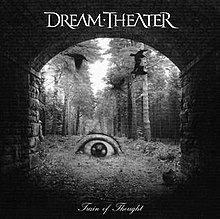
My first real initiation into progressive rock music came when I was 16, with Dream Theater's "Train Of Thought". My cousin - probably pissed off by my emo leanings at the time - lent me his copy of the album with strict instructions that I listen to it once a day in its entirety. So fascinated was I by its unorthodox time signatures and liberal use of keyboards that I religiously stuck to my promise for the next couple of months, often exceeding the recommended listening time. Below are some of my all time prog rock favourites (listed chronologically).

A Saucerful Of Secrets/Pink floyd  (A Saucerful Of Secrets, 1968)  Just when the chaos seems palpable, Wright's organ kicks in and order is restored. I couldn't find the original, but this "Live in Pompeii" version is equally compelling.

Long Distance Runaround/Yes  (Fragile, 1971)  Stellar performances by keyboardist Rick Wakeman and bassist Chris Squire.

Come Sail Away/Styx  (The Grand Illusion, 1977)  Psychedelic keyboard solo in the second half of the song.

Tom Sawyer/Rush  (Moving Pictures, 1981)  I was a fan of this song long before I truly discovered the band.

The Waking Edge/Jethro Tull  (Crest Of A Knave, 1987)  Anderson's flute in the opening sequence. The song has quite a ballad-like feel to it, unlike their previous stuff.

New Millennium/Dream Theater  (Falling Into Infinity, 1997)  One of my favourite DT tracks, despite keyboardist Jordan Rudess' absence. Myung's bass tapping is incredible.

The Grudge/Tool  (Lateralus, 2001)  The entire album is a lesson in (often darkly) heterodox time signatures.

The Sound Of Muzak/Porcupine Tree  (In Absentia, 2002)  Drummer Gavin Harrison plays a tricky rhythm in the verse.

Endless Sacrifice/Dream Theater  (Train Of Thought, 2003)  A typical DT composition. Sweet, almost ballad-like opening melody, followed by an explosive guitar-keyboard-drum onslaught.

Thursday, October 6, 2011

Thought: My top 10 most played tracks on iTunes

Sitting around, desperately thinking of a way to honour the memory of Mr. Steve Jobs on a music blog. Despite the cries of self-proclaimed 'purists' who have often criticised Apple of diluting the importance of music records, one has to concede that Mr. Jobs and his techie cohorts brought music closer to us listeners than erstwhile record companies had ever done. I've been using iTunes for over four years now and, although it's not my default player for music files, I still use it regularly, particularly for music that isn't catalogued into albums. This includes a major chunk of my collection, which is almost as song-based as it is album-based. So, after four years (and counting) of usage, I hereby share something very personal: my 'top 10 most played tracks on iTunes' list. :)


Apologise/Timbaland feat. One Republic
Skinny Love/Bon Iver
Blue Eyes/Cary Brothers
The Man Who Can't Be Moved/The Script
Blue And Yellow/The Used
They Bring Me To You/Joshua Radin
Hope Leaves/Opeth
Broken Wings/Alterbridge
Without A Face/Rage Against The Machine
Bohemian Rhapsody (Queen cover)/California Guitar Trio

Friday, July 8, 2011

Thought: My favourite 'falsetto' performances


 Watch Over You/Alter Bridge  (Myles Kennedy's pipes are seriously among the best in the business today.)

Free Falling (Tom Petty cover)/John Mayer  (He probably found Petty's original pitching too hard to pull off, haha. Sounds pretty good, though.)


You Can Still Be Free/Savage Garden  (They were so good, yet so short-lived.)

High And Dry/Radiohead  (Thom Yorke at his poppish best.)

Wicked Games/Chris Isaak  (The all-acoustic arrangement really helps bring out all that's good in his voice.)

She Will Be Loved/Maroon 5  (The chorus still remains one of my all time favourites.)

Apologize/Timbaland feat. One Republic  (He just sings two words in the falsetto, but it makes all the difference.)

In A Little While/U2  (Almost sounds like he's yodelling.)

Sunday, July 3, 2011

Thought: The saddest playlist ever

Shadow Of The Day/Linkin Park  (For your 3-major-1-minor days)

Too Much/Sufjan Stevens  (Not supposed to be a depressing song. Dunno why I feel sad when I hear it.)

Transatlanticism/Death Cab For Cutie  (The most moving song I've ever heard about the pain of separation)

Reign Of Love/Coldplay  (They don't call it melancholy rock for nothing)

Epiphany/Staind  (Old churches, candelabras, the works)

The Nothing Song/Sigur Ros  (Vanilla Sky)

Streets Of Philadelphia/Bruce Springsteen  (Plays in the end credits of the movie "Philadelphia". Enough said?)

I Giorni/Ludovico Einaudi  (The truest songs don't really need lyrics.)

Saturday, June 4, 2011

Thought: Famous children's choir parts in rock music


I read recently that the (now grown up) children who had lent their voices to the song "Another Brick In The Wall" by Pink Floyd had tried to sue the band for royalties. Although they lost the court case, the truth is that had it not been for the choir part in the song, it wouldn't have been the hugely successful hit song it has become. Check it out,

Another Brick In The Wall/Pink Floyd  (Towards the end, just before Gilmour's epic solo.)

Some of my other choir favourites include

School's Out (For The Summer)/Alice Cooper  (Outro. The song ends with the sound of a dismissal bell.)

Youth Of The Nation/POD  (Outro. Not really a children's choir. Used to be one of my favourite songs to sing along to.)

Aeroplane/Red Hot Chili Peppers  (Outro. Bassist Flea's daughter too is among the singers.)


Saturday, May 14, 2011

Thought: Distinctive lead voices

How often have you heard a song for the first time and correctly identified the band/artist simply by the first few strains of the vocals? It's happened to me on so many occasions that I've begun to marvel at this wonderful power that some singers possess - a unique voice. Listed below, in no particular order, are nine belters whose vocal styles are anything but run-of-the-mill.

1. Scott Stapp (Creed) : Songs like "Higher", "One Last Breath" and "With Arms Wide Open" wouldn't be the same without his powerful syllable-extending vocals ('yeeeeeeeeeeeaaaahhh', 'meeeeeeeeeaaahhhhhh', 'awaaaaaaaaaaaaaaaaaayyyyyyyyy', you get the drift).
Hide/Creed

2. Dido : When I first heard her, I was struck by how weighty her voice was. The unusually thick vocals make her easily recognizable from a mile away.
Sand In My Shoes/Dido

3. Michael Stipe (REM) : Stipe's singing seems to suggest a man who has a lot to tell but the song is holding him down. I used to imagine (jokingly, of course) him going to the bathroom in the middle of a studio session, screaming in front of a mirror for twenty minutes and returning to finish the recording as though nothing had happened.
Losing My Religion/REM

4. Chester Bennington (Linkin Park) : When he sings, he sounds commonplace enough. Fortunately, he doesn't sing much. He screams. And when your songs are all about heartbreak and the injustice of love, you've got enough reason to scream bloodcurdling screams. Warm water, dude?
Runaway/Linkin Park

5. Anthony Kiedis (Red Hot Chili Peppers) : Okay, am I the only one who thinks he has an accent? He doesn't sound American at all. One of the most distinctive styles in rock music, his jerky vocals have been, er, instrumental in giving the band its niche sound.
Animal Bar/Red Hot Chili Peppers

6. Joel Pott (Athlete) : He has this very singular tendency to overemphasize certain syllables in the song. Often, the preceding word is cut short or partially mellowed for this purpose. Check out the 'every-bbbooody' in the chorus of "Westside".
Westside/Athlete

7. Dolores O'Riordan (Cranberries) : That amazing pitch-modulation in the chorus of "Zombie" is out of this world. If she were a musical instrument, she'd be a shakuhachi.
Dreams/Cranberries

8. Tom DeLonge (Blink 182) : The poster-boy of 21st century emo-punk. Out of the two vocalists in the band, he's the one with the more boyish voice. He has this rather silly, albeit endearing habit of adding an 'o' before an 'i'. Words like 'I', 'nice', 'rice' and 'fight' become 'Oi', 'noice', 'roice' and 'foight'. Whatever rocks your boat, man.
Stay Together For The Kids/Blink 182

9. Colin Meloy (Decemberists) : He sometimes sings like he has the voice range of an octogenarian with a nasty cold. But within that range, he's got one of the most powerful voices I've ever heard. No fancy pitch manoeuvers, just plain vocal delivery.
Calamity Song/Decemberists

Saturday, April 30, 2011

Thought: Beatlemania in the time of Pink Floyd (the 'sound' of a band)

Arguably the greatest musical phenomenon of the last half-century, the Beatlesque era of the sixties has left an indelible mark on pop culture. What made the Beatles irresistable to those who heard them? Why do Beatles songs still play in the hearts of music fans today, more than any other band of the time? While numerous theories abound, all in relation to aspects of the band other than the music itself, I decided to try and find an explanation in their songs.

I think the most important reason for their success in drawing loyal fans is that the Beatles didn't ever have any major lineup changes. It was always John, Paul, George and Ringo. And, like the smart boys they were, they decided to end the band altogether at the first signs of infighting. Paul went on to form the Wings, John and George had successful solo careers and Ringo, I presume, went on to live a happy family life somewhere. My point is that the Beatles, as a group, is separate from its individual members. So when I think of the Beatles, I think of that golden period when the four were creating musical history together.

It is for this reason that the music of the Beatles has a very specific sound. This sound is consistent in all their albums, from their very first release (Please Please Me, 1963) to their last (Let It Be, 1970). To a fan, the sound of a band is of utmost importance. Many bands take great pride in diversifying their musical sensibilities and exploring new sounds. While it is a commendable endeavour no doubt, creative pursuits like this often lead to inconsistency in a band's sound. Let me explain further. For this purpose, I am compelled to compare the Beatles with one of their biggest contemporaries, Pink Floyd.

Piper At The Gates Of Dawn (1967)

Pink Floyd started off playing the UK underground circuit in the sixties. Their lead singer at the time was Syd Barrett, with a very distinctive songwriting style. I shall call the early years the "Piper" era. Barrett left the band while it was yet to peak. Understandably, the rest of the members had great ambitions for the band and Roger Waters (bass) decided to take matters into his own hands. Lead vocals were thereafter shared between him and David Gilmour (guitar), with Rick Wright (keyboards) pitching in with backing vocals where required. I shall call this the "Dark Side" era.

Dark Side Of The Moon (1973)
Gilmour and Waters soon decided they couldn't be in the same band anymore and Waters bid adieu to the others. Around that time, the world of music was undergoing what I like to call its own version of an 'industrial revolution'. From then on, the band's sound became harder and more progressive, with cleaner guitar and keyboard arrangements. Gilmour, Wright and Mason (drums) made up what would be the final leg of the band's career, the "Divison Bell" era.

The Division Bell (1994)

As a result of these three mutually exclusive periods of musical creativity, any Pink Floyd Greatest Hits compilation sounds like a mix cd of songs by more than one band. Now, certain connoisseurs of classic rock (like yours truly) still love Pink Floyd in all its three avatars. However, to an ardent fan of, say, the "Piper" era, the music of Pink Floyd's later years must sound like quite a rude deviation. Similarly, to a fan of the clean-edged guitar lines of the "Division Bell" era, the almost 'quirky' arrangements of the band's early years must sound like some kind of a joke.

A fan of the Beatles, on the other hand, will most probably like all of the band's recorded music, or at least not be averse to any of it. Whether it's the boyish tune "P.S. I Love You" or the edgy protest song "Get Back", the sound of the Beatles runs at the core of their entire catalogue of songs, and it is for this reason, above all, that their fans have stayed loyal all these years.


Saturday, March 12, 2011

Thought: The death of the Anthem

The view expressed in the following lines is my personal opinion. I make no claims regarding its factual accuracy. Feel free to disagree.

Music has evolved dramatically in the last few decades. While there are obvious stylistic differences in what we hear now and what our parents used to hear in their youth, there is a quality in particular that gave the music of their time a distinct sound. I shall call it the 'anthemic' quality. An 'anthem' is a song that is sonically grand. It is a song that sounds majestic, a song that wouldn't feel out of place in an orchestra, for example. Most of the pre-nineties bands incorporated this quality in their music, intentionally or otherwise. Queen were a band who couldn't help sounding anthemic. It was second nature to them. Anthems were not always products of elaborate arrangements. The song "Bridge over troubled waters" by Simon and Garfunkel is an anthem that was often performed on a single guitar played by Paul Simon. Some of the notable anthems of the 60s, 70s and 80s are

Let It Be/Beatles
Baba O' Riley/The Who
Like A Rolling Stone/Bob Dylan
More Than A Feeling/Boston
Born In The USA/Bruce Springsteen
Heal The World/Michael Jackson
Always/Bon Jovi
November Rain/Guns N' Roses
American Pie/Don Mclean
Learn To Be Still/Eagles
Super Trouper/ABBA
Imagine/John Lennon
Dreamer/Ozzy Osbourne
Coming Back To Life/Pink Floyd
Maggie May/Rod Stewart
Rhinestone Cowboy/Glen Campbell
Touch Me/The Doors
You Can't Always Get What You Want/Rolling Stones
Free Falling/Tom Petty And The Heartbreakers
I Still Haven't Found What I'm Looking For/U2
Jump/Van Halen
Don't Stop Believing/Journey
I Wanna Be Sedated/Ramones

Anthems fizzled out in the nineties with the advent of grunge/alternative music that promoted a 'rawer' sound. The anthemic tone was now considered to be nothing more than a shallow attempt at making a song a hit. Chord patterns changed, vocal delivery was controlled to sound less 'superhuman' and 4-piece bands started to sound like 4-piece bands again. The age of the anthem was over.

Thursday, March 3, 2011

Thought: The driver-listener analogy


Car enthusiasts, when reviewing a car, generally categorize its attributes under four or five broad headings – features, top speed, fuel efficiency, value for money, etc. There's a final attribute that often acts as the clincher – driveability. How easy is it on the road? How involving is the driving experience? What is the level of satisfaction? The importance of this criterion lies in its vagueness. It is not absolute or measurable. I may buy a car that gets me twenty kilometres to a litre of fuel, or has a top end of 200 kph, or the latest safety features but if it isn't pleasing to drive, I would never be satisfied.

The reason I brought this up is because I believe that something more or less analogous to driveability exists in music – listenability. Is the song easy on the ears? How wholesome is the listening experience? Does the song satisfy the listener, or leave him wanting more?

There are some musicians who are technically brilliant, but their songs are not all that listenable. Again, there are musicians who are relatively mediocre in their technique, but their songs are quite pleasing to listen to. This in no way implies that musical ability is unimportant. Technical prowess is the result of a musician's dedication and perseverance and deserves recognition. However, it is not a sufficient criterion for listenability.

A highly listenable song, according to me, has to be
cohesive. The song should link completely, from beginning to end. The variations should not be abrupt, and successive parts should be rooted firmly in the previous parts.
balanced. An instrumental solo should not sound stretched. At the same time, the vocals should not override key instrumental patches.
tight. This mainly applies to groups or bands. A song, as a finished product, should sound like a single unit, regardless of the number of musicians. Often, a band may consist of members who are virtuosos in their own right but fail to synchronize their respective inputs, resulting in an unpleasant listening experience. Then again there are bands that sound good because their members have great co-ordination, even if they aren't godly musicians.

Of course, these are criteria I came up with off the top of my head. They are by no means exhaustive. For those of you who use iTunes or any other player that tracks your listening habits, I suggest a small exercise. Look up the list of your 'most played' songs. Chances are all the songs in it possess these qualities. You might also discover other features common to your songs, and soon enough you'll have your own unique definition of a listenable song.

I may occasionally feel like driving a car that goes from 0 to 100 in three seconds, for the sheer thrill it gives me. However, such a thrill is short lived. In the long run, I would prefer a balanced car, one that has decent top end on straight roads but is also easily maneuverable on sharp turns and doesn't rattle or run out of gas in the middle of nowhere.